
AN ANCIENT LAMENTATION FOR A WAR-RAVAGED CITY
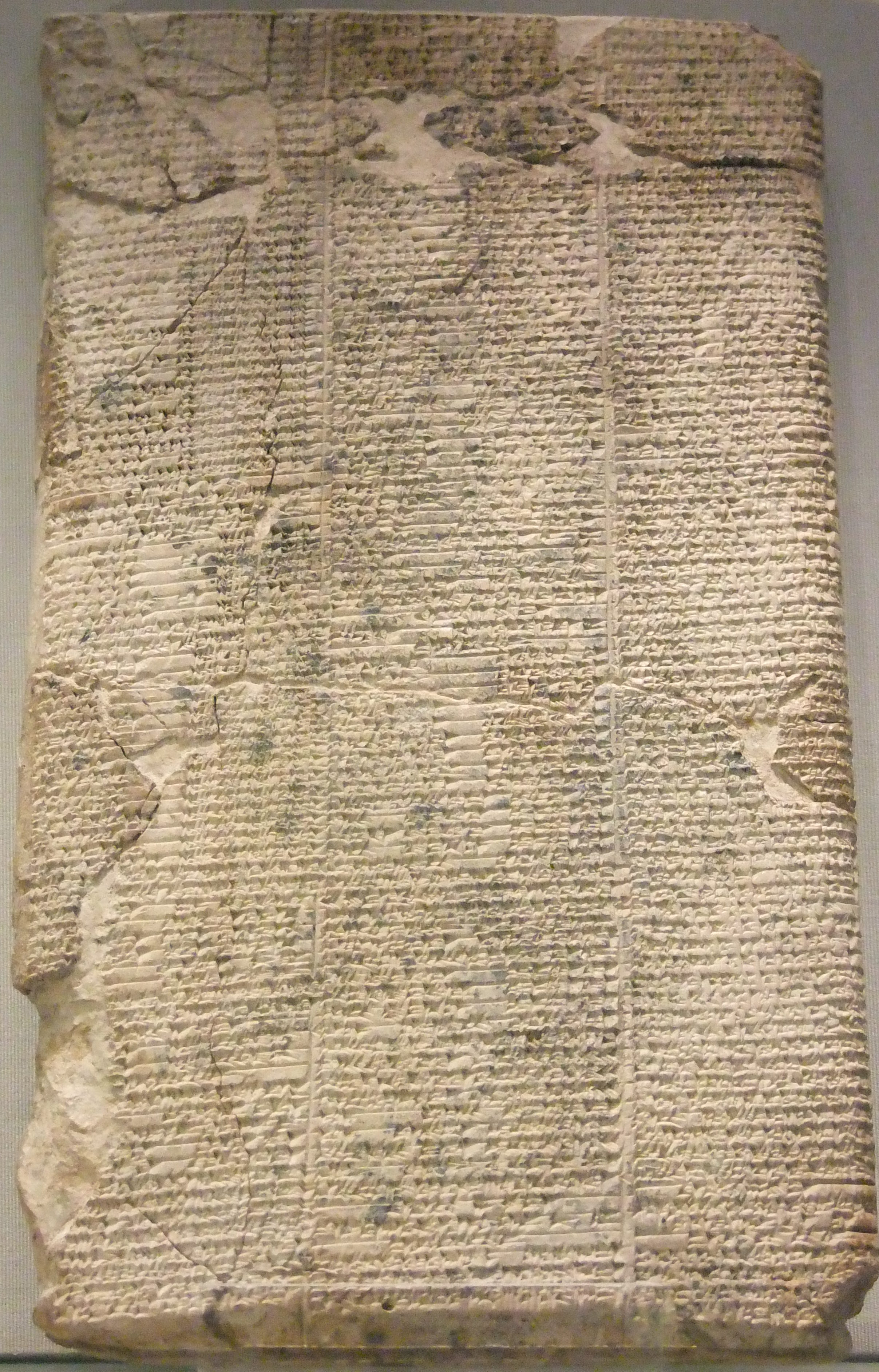 Lament for Ur at the Louvre Museum with permission: Dfg13 |
LAMENT FOR UR Assemblages from the city that is no more O city, your name exists but you have been destroyed.
|
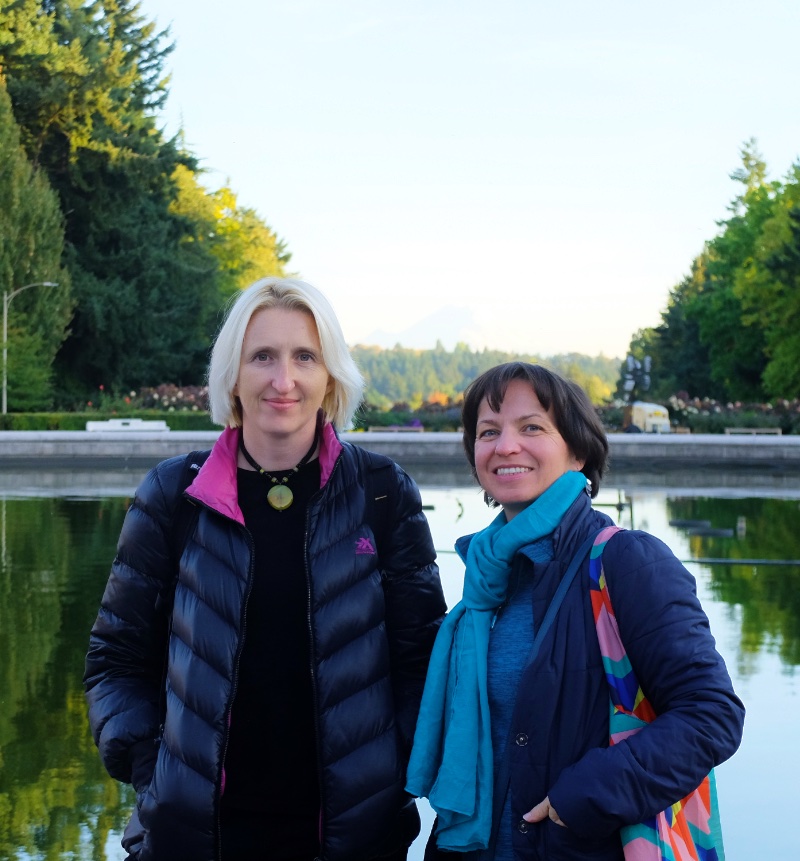 PROJECT CO-AUTHORS:
Ewa Trębacz and Anna Niedźwiedź
Main areas of expertise:
Ewa Trębacz - composer, media artist
Anna Niedźwiedź - voice, cultural anthropologist
***
Ewa Trębacz and Anna Niedźwiedz have been collaborating for over 20 years. Anna Niedźwiedz, Ph.D., professor at the Jagiellonian University, is a cultural anthropologist specializing in the anthropology of the body and space, and the study of religion and rituals, including mourning rituals as performative events. Anna Niedźwiedz's voice is a ubiquitous element of Ewa Trębacz's works as part of concert performances and electronic parts of her works.
O city, the lament is bitter, the lament made for you.
Your lament is bitter, o city, the lament made for you.
[Source: ETCSL, University of Oxford ]
A lament is a specific poetic form expressing feelings of grief and mourning. The five ancient Sumerian city laments are associated with the destruction of these cities by war. We chose one of them - Lamentation over the City of Ur (ca. 2000 BC) - as the foundation of our project. The lamentation is performed by a female voice - a tutelary goddess Ningal weeping for her city she was not able to protect from the desctructive "storm". Despite the tragic events that followed, her words resonate with resilience and unbroken spirit.
The bitter storm having come to be for me during the day,
I trembled on account of that day but I did not flee before the day's violence.
The bitter lament having come to be for me during the night,
I trembled on account of that night but I did not flee before the night's violence.
[...]
On that day,
when such a storm had pounded,
when in the presence of the queen her city had been destroyed,
on that day, when such a storm had been created,
when they had pronounced the utter destruction of my city,
when they had pronounced the utter destruction of Urim,
when they had directed that its people be killed,
On that day,
I did not abandon my city,
I did not forsake my land.
[Source: ETCSL, University of Oxford ]
In addition to the textual layer, our project focuses on the sensory and spatial dimension of sound and its power co-creating mourning rituals. The initial stage of our project includes the realization of sound recordings by Ewa Trębacz with Anna Niedźwiedz (voice, improvisation), in an iterative, multi-layer process of creative exploration of the literary text in its original language. These recordings will eventually become the source material for a spatial soundscape. The composer's intention is for this sound image to serve as the foundation of an open and performative intermedia work.
The project is currently in its initial stage: we are collecting the sound material and researching tools and techniques to mediate between the ancient text and our (highly subjective) interpretations.
MODERN TOOLS
Recent years brought a true explosion of machine learning based tools for natural language and image processing. These tools have developed rapidly, keep evolving in front of our eyes and have already irreversibly changed the world, becoming ubiquitous part of our everyday's existance.
It is tempting to immediately incorporate them into our technical and artistic vocabulary, however they need to be approached critically, and used with a lot of caution. In this project, Ewa Trębacz is (tentatively) combining a variety of AI-based tools to help mediate between the ancient text and our present interpretation and commentary.
Part of the project is an experiment: an attempt to utilize those modern tools to create a bridge between the past and the present. It is assumed that a large part of these experimentations may end in failure, or lead to unexpected results or in directions one would not predict. The hope is that these tools would allow to approach this project from multiple angles, also those otherwise unplanned. Some of the examples:
- CO-AUTHORING TEXT WITH NLP TOOLS
GPT-2 model has been fine tuned on several texts, such as all 5 Sumerian City Lamentations (including the Lament for Ur), but also historical war treatises, and modern international documents regulating urban warfare.
- IMAGE TO TEXT
These tools were used to extract blunt descriptions of images. The images were collected from the Interned, and represented destruction caused by urban warfare from areas affected by conflicts in the 21st century.
Ewa Trębacz made a conscious choice to select city imagery from zones with military conflict active during her own adulthood, something she could personally relate to and comprehend. Such raw descriptions, deprive of any emotion, were used to co-author “poetry” - short forms, describing scenes from those cities. None of the original images would be directly used in the project but the resulting text will potentially be presented as a visual layer of the project.
- AUDIO
Machine learning is used to create a visual map of sounds with similar spectral characteristics. Applied to selections of text and singing, it results in hybrid transitional forms, moving fluently from sung lamentations to a spoken word, and creating a chorus of voices.
ASSEMBLAGES FROM THE LONG GONE CITY
Our choice of literary text
The awesomeness of this storm, destructive as the flood,
truly hangs heavy on me.
Because of its existence, in my nightly sleeping place,
even in my nightly sleeping place
truly there was no peace for me.
Nor, because of this debilitating storm,
was the quiet of my sleeping place,
not even the quiet of my sleeping place,
allowed to me.
Truly I did not forsake my Land.
[Source: ETCSL, University of Oxford ]
The Sumerian literary text that is the basis of our project represents a genre of city lament, characteristic of the era of the end of an existing order, a time of riots and wars, and a substantial change in population. It is a literary form that emerged around the time of the fall of the Sumerian city-states and is the oldest known textual form of human expression in such dramatic times. Although we are separated by millennia, in this text we hear a longing for a world that passes, for what is known, despair and mourning for those who have passed away. At the same time, lament becomes a ritual, a specific process of coming out of trauma or mourning, taming an unimaginable tragedy.
The text of a mourning poem from 4,000 years ago seems historically and culturally distant from us, yet we are able to relate to it on a basic emotional level. The Lament mourns the passing of a certain world, a certain known order - it is not the end of the world, but of the world as they knew it. At the same time, this text is far enough from our times to completely avoid literal connections with today's conflicts or political and cultural issues. Only the human aspect remains and creates a palpable bridge from the distant past to the present.
We chose a text that could symbolize the human condition in a special moment - a fundamental change, a small end of the world, and at the same time through the ritual of farewell, mourning, it seems to indicate the way out, transition, transformation.
Sound in the rituals of passage
The woman, after she had composed her song for the tearful balaĝ instrument,
herself utters softly a lamentation for the silent house:
The storm that came to be -- its lamentation hangs heavy on me.
Raging about because of the storm,
I am the woman for whom the storm came to be.
The storm that came to be -- its lamentation hangs heavy on me.
[Source: ETCSL, University of Oxford ]
Rituals of passage related to death, dying, and loss take various forms in different cultures, which is reflected in the variety of sonic manifestations associated with these rituals. They consist, for example, of singing, recitation, screaming, loud crying, but also noise, even laughter, rhythmic patterns and intensification of sounds, and on the other hand their passage to ritually maintained silence.
In anthropological approaches to the ritual, its transformative and therapeutic power is emphasized. Particularly important is the physical involvement of the participants, because it is in and through their bodies that the ritual is created and happens. The important role of sounds results from their physicality and materiality, which literally permeates the space and touches the bodies of the participants of the ritual.
Simultaneously sound always evokes transience and unique oneness, it results from the constantly changing arrangement - a temporary assemblage of specific spaces, objects, bodies.
Our project is a kind of contemplation on the transience of sounds and their role in the rites of passage related to death, passing, leaving, loss and mourning. A special point of reference for us becomes the Sumerian text that describes loss and departure. In this case, the city of Ur represents for the literary subject his whole world - a passing civilization.
We are looking for sounds that do not exist, starting from a language that disappeared several thousand years ago - today we do not know how to pronounce, how to sing these words. We also do not know what acoustic spaces were associated with the city of Ur and life in it, how emotions were expressed through sounds, for example during mourning rituals.
Assemblages: fluid, accidental, unique moments in time
We will attempt to create a kind of assemblage starting from the text, through the search for meanings of words that seem universal, but also through a material and sound attempt to evoke the past to which we have no direct access.
The result is a kind of performance that engages our contemporary bodies and interacts with texts from the past. This performative act is a kind of mourning ritual for the city of Ur, which we somehow create and evoke, simultaneously expressing its non-existence and inaccessibility. Thus, the process of materializing and embodying the text and the ideas that flow from it will take place through the human voice. It is an attempt to reach human emotions - a kind of archeology of the literary text, by embodying and enlivening it with voice and physical interaction with space.
By means of iterative recording of successive variants, we will attempt to reach the heart of the text by discovering successive layers - the discovery of human emotions from the times of the first literary documented little end of the world.
The concept of assemblage is related to the interpretation of reality through the category of momentarily created and unique systems, which in turn create and generate something new themselves, but basically they are ephemeral, fluid, a bit accidental and unique.
In addition, assemblages are also about going beyond the anthropocentric perception of reality and emphasizing the relationality of people, animals, bodies, space, plants, objects, various matter and its various textures, machines and technologies, etc. It is also an indication of non-discursive, performative and embodied elements of reality. and a turn towards interaction and broadly understood ecology.
In the process of making sound recordings, each moment is unique, and the result depends on a complex network of factors. These include the interaction between the artist and the surrounding space, the acoustic conditions of which are determined by specific physical characteristics at a given moment. Also the technology and the way it is used defines such a moment (characteristics of the microphone systems used, their setting, subsequent transformations) - all this adds up to an extremely subjective, individualized sound image, unique in time and space.
In our project, we are looking for "magical" moments in which, on an emotional level, we will be able to connect with the space "here and now", evoked at the same time by words spoken by someone 4,000 years ago.
 girlbot@ewatrebacz.com
 BabelScores
 Youtube
 SoundCloud
.JPG)